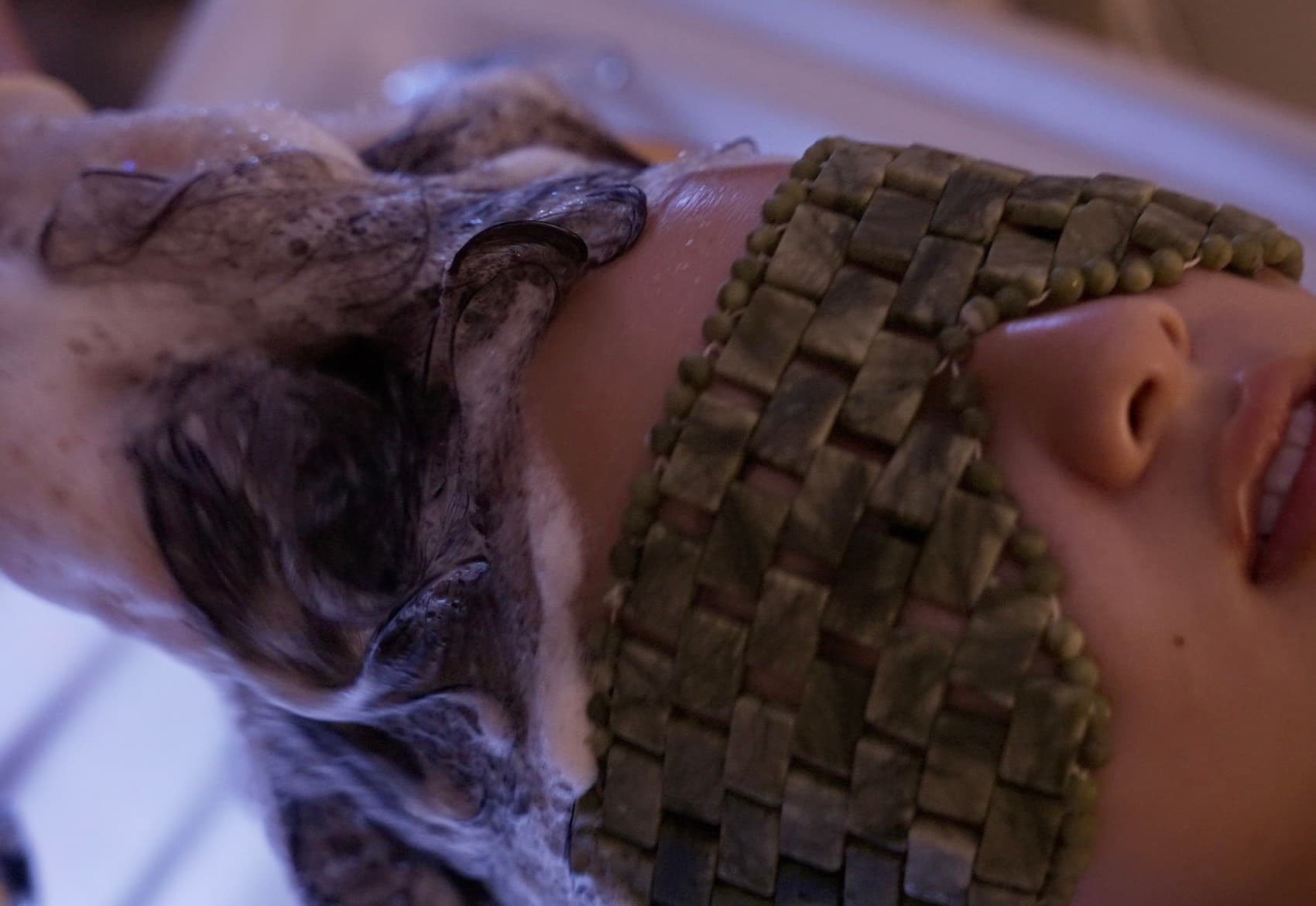
What Is Scalp Exfoliation?
Scalp exfoliation removes dead skin cells, excess oil, and buildup from the surface of your scalp, unclogging hair follicles and creating a cleaner foundation for hair growth. It is the same principle as facial exfoliation — clearing what has accumulated so the skin underneath can breathe and function.
Your scalp sheds skin cells constantly, just like the rest of your body. But unlike your arms or legs, your scalp is covered in hair, coated in oil, and exposed to products daily. All of that creates an environment where dead cells, sebum, and residue accumulate faster than they shed naturally.
When this accumulation goes unchecked, follicles get blocked. Oil production becomes uneven. Flaking increases. And your hair grows from a compromised foundation — thinner, weaker, and more prone to shedding than it should be.
The Benefits Go Deeper Than a Clean Feeling
Scalp exfoliation is not just about removing what is on the surface. The downstream effects are what actually matter:
Unclogged follicles produce stronger hair. When follicles are clear, they can receive nutrients and oxygen from blood circulation properly. Hair grows from a healthy root environment instead of fighting through a layer of debris.
Oil production rebalances. A congested scalp often overproduces oil as a compensatory response. Once the congestion clears, sebum production tends to normalize — meaning your hair stays fresher longer between washes.
Products actually work. Every serum, treatment, and conditioner you apply lands on your scalp, not on a layer of dead skin and residue. This alone can make your existing routine dramatically more effective.
Flaking reduces. Much of what people attribute to dandruff is actually dead skin buildup that has not been adequately cleared. Regular exfoliation addresses the mechanical cause before you reach for medicated shampoo.
Circulation improves. The physical act of exfoliating — whether by hand, brush, or professional technique — stimulates blood flow to the scalp, delivering more oxygen and nutrients to hair follicles.
Physical vs. Enzymatic: Two Different Approaches
Not all exfoliation works the same way, and choosing the wrong type for your scalp condition can cause more harm than good.
Physical exfoliation uses granules, brushes, or textured tools to mechanically lift dead skin and debris from the scalp surface. Scalp scrubs with sugar, salt, or fine particles fall into this category. It is effective for heavy buildup and thick, resilient scalps — but it can irritate sensitive, inflamed, or thinning scalps.
Enzymatic (chemical) exfoliation uses enzymes or acids — commonly salicylic acid, glycolic acid, or fruit enzymes — to dissolve the bonds holding dead skin cells to the scalp surface. No friction required. It is gentler, more precise, and better suited for sensitive scalps, active irritation, or areas where physical scrubbing would cause discomfort.
Most advice you will find online treats these as interchangeable: "just exfoliate your scalp once a week." But they are not interchangeable. A person with an oily, resilient scalp benefits from physical exfoliation. A person with a dry, sensitive, irritated scalp needs enzymatic. A person with heavy buildup in some areas and sensitivity in others needs a combination — and that combination should be guided by what each area of the scalp actually looks like, not a best guess.
Why One-Size-Fits-All Exfoliation Misses the Point
Here is what most scalp exfoliation articles will not tell you: your scalp is not one uniform surface.
The crown of your head may be oily. Your hairline may be dry. The area behind your ears may have product buildup while your temples are clear. Treating every zone with the same scrub at the same intensity is like using a single skincare product for your entire face regardless of whether you have an oily T-zone and dry cheeks.
At Lavie Bella, our therapists assess your scalp before selecting an exfoliation method. Using a camera at 50x and 200x magnification, we scan 8 distinct areas and score the condition of each. The magnification reveals things the naked eye cannot — follicle congestion, microscopic flaking, sebum plugs, and areas of inflammation that have no visible surface symptoms yet.
Based on what the camera shows, your therapist calibrates the approach for each zone. Heavy buildup areas get targeted physical exfoliation with professional-grade formulations. Sensitive or irritated areas get gentler enzymatic treatment. The result is thorough exfoliation without over-treating any area — something a single at-home scrub simply cannot achieve.
How to Exfoliate Your Scalp at Home
A good at-home exfoliation routine is valuable maintenance between professional sessions. Here is what works:
Scalp scrubs — Look for scrubs with fine, uniform granules (sugar-based is gentler than salt). Apply to damp hair, massage in small circular motions using your fingertips — never your nails — and rinse thoroughly before shampooing. Once a week is the standard starting point.
Liquid chemical exfoliants — Scalp serums containing salicylic acid or glycolic acid dissolve dead skin without physical friction. Apply to your scalp, let it sit for the recommended time, then shampoo out. These are better for sensitive scalps or anyone who finds scrubs too aggressive.
Scalp brushes and massagers — Silicone scalp brushes used during shampooing provide light physical exfoliation and improve circulation. They are not a replacement for a proper scrub or chemical exfoliant, but they are a useful daily-ish complement.
What to avoid: Using your fingernails to scratch buildup loose — this creates micro-abrasions that invite irritation and infection. Exfoliating more than twice a week without professional guidance — over-exfoliation strips your scalp of its protective barrier and triggers a cycle of dryness, oil overproduction, and more flaking. Using body scrubs on your scalp — the granules are too large and too harsh for scalp skin.
How Often Should You Exfoliate Your Scalp?
The most common advice is once or twice a week at home, and that is a reasonable starting point for most people. But the real answer depends on your scalp condition, hair type, and product usage.
Once a week works for most people with normal scalps who use minimal styling products.
Twice a week may be needed if you are a heavy product user, live in a hard water area, or have an oily scalp that accumulates quickly.
Less than once a week is better if you have a dry, sensitive, or irritated scalp. Over-exfoliation makes these conditions worse.
Professionally, exfoliation as part of a scalp treatment every four to six weeks handles the deeper buildup that at-home methods leave behind. Your therapist can see what is accumulating between visits and adjust the professional approach accordingly.
The most reliable way to know your ideal frequency: see what your scalp actually looks like under magnification. At Lavie Bella, your Scalp Reset analysis shows exactly how much buildup has accumulated since your last visit, making frequency recommendations specific to you — not a generic guideline.
When Exfoliation Is Not Enough
Exfoliation is one piece of scalp health, not the whole picture. If you are exfoliating regularly and still dealing with persistent flaking, itching, or shedding, the issue may go deeper than surface buildup.
Mineral deposits from hard water require chelating treatments, not exfoliation. Scrubbing harder will not break chemical bonds between calcium and your hair shaft.
Fungal conditions like seborrheic dermatitis need targeted treatment, often medicated. Exfoliation can help manage symptoms but will not resolve the underlying cause.
Medical scalp conditions — psoriasis, alopecia, or persistent unexplained hair loss — warrant a dermatologist visit. A professional scalp analysis can often help clarify whether your concern is buildup-related or something that needs medical attention.
For everything that is within the scope of scalp care, a comprehensive approach works best: regular at-home exfoliation for maintenance, professional scalp treatments for the deeper work, and a scalp analysis to make sure you are addressing the right problem. Our Scalp Care Guide covers the full picture of how these pieces fit together.
Frequently Asked Questions
Can scalp exfoliation cause hair loss? Proper exfoliation does not cause hair loss. Over-exfoliation — too aggressive, too frequent, or with the wrong method for your scalp type — can irritate the scalp and contribute to temporary shedding. This is why matching the method to your scalp condition matters.
Should I exfoliate before or after shampooing? Before. Apply your exfoliant to a damp scalp, massage it in, then shampoo to rinse everything away. This order ensures the loosened buildup and dead skin cells are fully washed out.
Is scalp exfoliation good for hair growth? Exfoliation supports hair growth by keeping follicles clear and improving circulation. It creates the conditions for healthier growth — it does not change your genetic growth rate, but it removes barriers that slow it down.
Can I use a face exfoliant on my scalp? Face exfoliants with gentle acids (like salicylic or glycolic) can work on the scalp. Physical face scrubs are usually too fine to effectively clear scalp buildup. Body scrubs are too coarse. Scalp-specific products are formulated for the right balance.
How do I know if I am over-exfoliating? Signs include increased redness, stinging or burning during application, more flaking than before you started, and a tight or dry feeling after exfoliating. If any of these occur, reduce frequency and consider switching to a gentler enzymatic approach.