The Hidden Factor in Your Hair Routine
You can invest in the best shampoo, conditioner, and treatments money can buy — but if the water coming out of your shower is working against you, none of it matters as much as it should.
Southern California is known for hard water. Cities like Artesia, Cerritos, Long Beach, and Lakewood consistently rank among the hardest water areas in the state. And that hard water is doing more to your scalp and hair than most people realize.
What Makes Water "Hard"?
Hard water contains high concentrations of dissolved minerals, primarily calcium and magnesium. These minerals are not harmful to drink, but they interact with your hair and scalp in ways that create real problems over time.
When hard water meets shampoo, it prevents the shampoo from lathering properly and leaves behind a mineral film on your hair and scalp. That film builds up with every wash.
What Hard Water Does to Your Scalp
The mineral deposits from hard water can clog hair follicles and disrupt your scalp's natural oil production. Over time, this can lead to dryness, irritation, and flaking. Some people develop a tight, itchy feeling on their scalp that they mistake for a product sensitivity, when the real culprit is their water supply.
Hard water can also alter the pH of your scalp, making it more alkaline than it should be. A healthy scalp is slightly acidic. When that balance shifts, it creates an environment where irritation and buildup thrive.
What Hard Water Does to Your Hair
Mineral buildup on the hair shaft makes hair feel rough, dry, and straw-like. It can dull your color, make blonde hair take on a brassy or yellowish tone, and leave dark hair looking flat and lifeless.
Hard water also makes hair more prone to tangling and breakage because the mineral coating roughens the cuticle layer. If your hair feels difficult to manage despite using quality products, hard water may be a contributing factor.
What You Can Do About It
At home: A shower filter designed to remove minerals can make a noticeable difference. Look for filters that specifically target calcium and magnesium. A chelating or clarifying shampoo used once a week can also help remove mineral deposits from your hair.
Apple cider vinegar rinses (diluted with water) can help restore pH balance and remove some mineral buildup, though the results are modest compared to professional treatments.
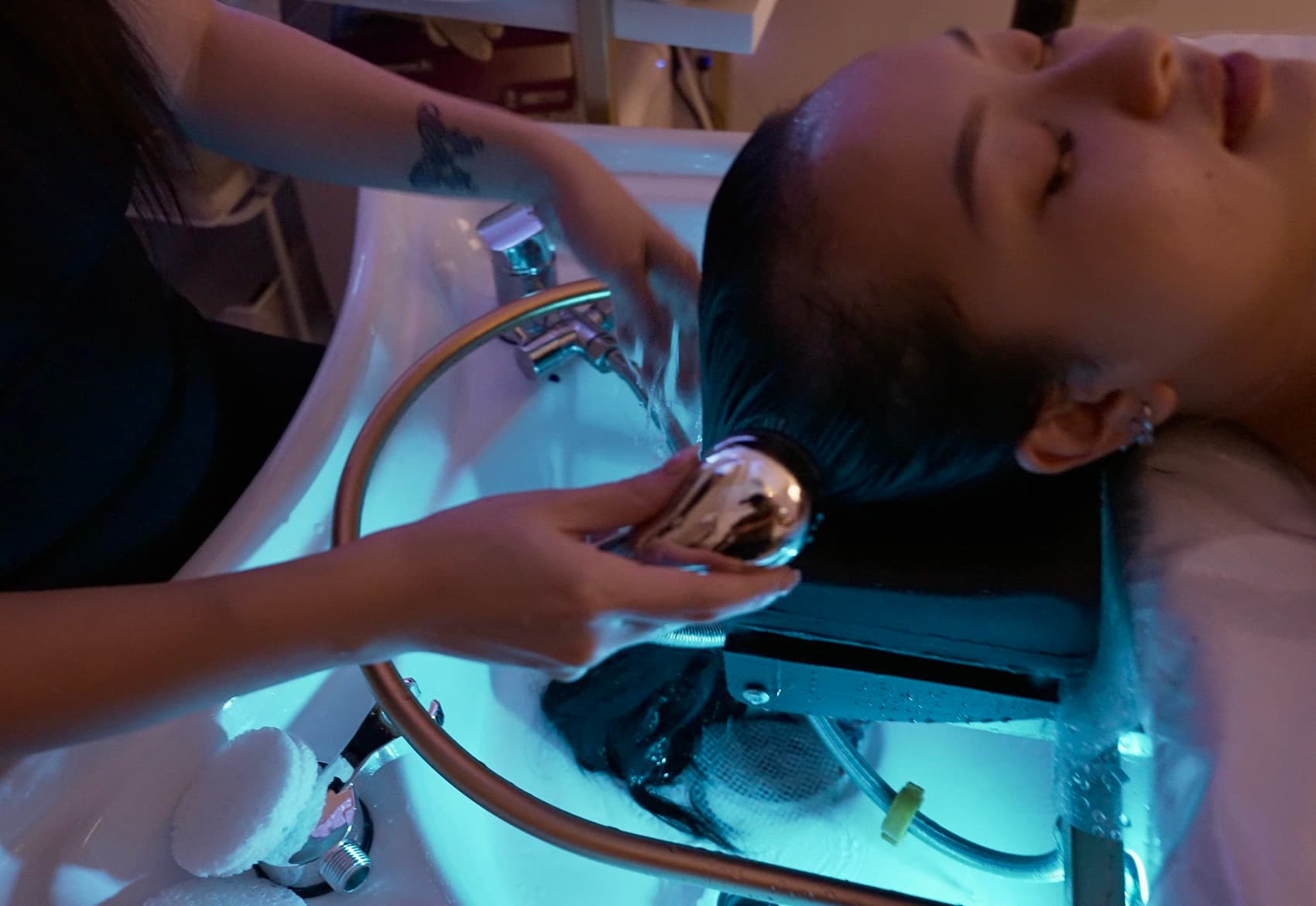
Professionally: A head spa session includes deep cleansing and exfoliation that removes the kind of stubborn mineral buildup that home products cannot reach. At Lavie Bella, our scalp analysis can show you exactly how much buildup has accumulated, giving you a clear picture of what your scalp is dealing with.
If you live in Southern California, hard water is a factor in your scalp health whether you realize it or not. Understanding it is the first step toward addressing it.